

Escaping the Film That Won’t Stop Playing in Your Head
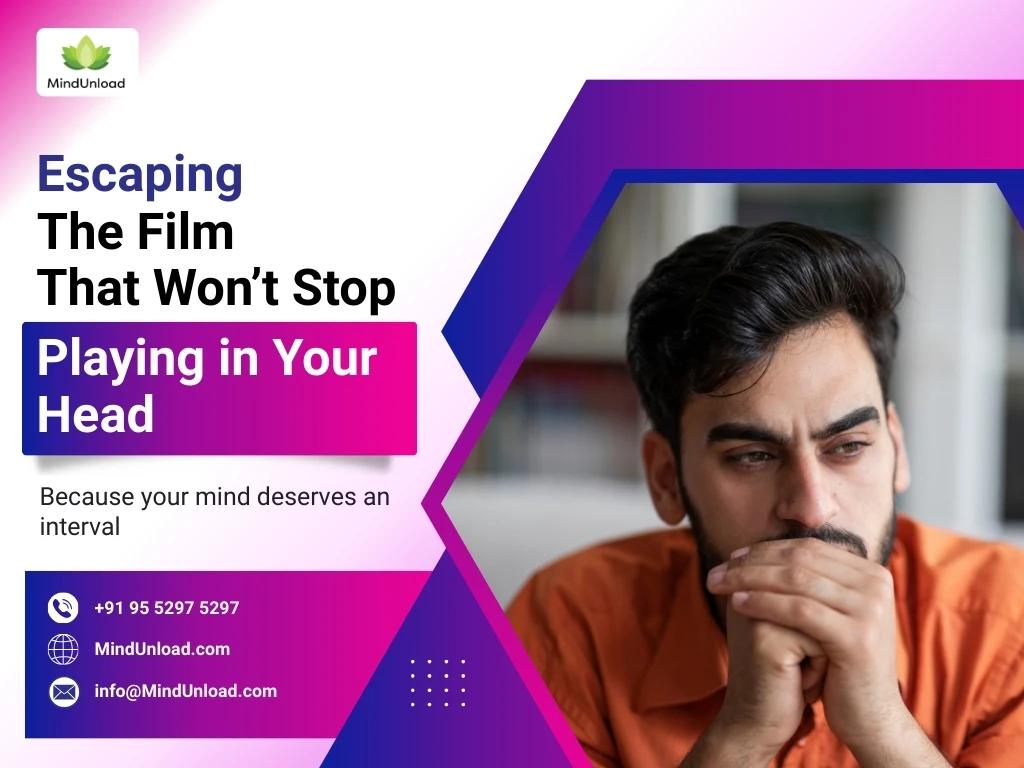
Because your mind deserves an interval
When anxious thoughts feel like a story on repeat
Imagine watching a tense thriller. The kind where every sound feels sharper, every shadow carries meaning, and every moment stretches longer than expected. The character moves through dim corridors, doors close abruptly, and something unsettling remains just out of sight.
Now imagine the closing credits never appear.
The screen stays lit.
The tension never fades.
That is what anxiety can feel like. Not always loud or visible, but constant - a story that continues without rest.
The Mind as a Private Cinema
Anxiety is not always expressed through tears or panic. Often it appears as a quiet sequence of thoughts playing repeatedly in the background: what might go wrong, what should have been said differently, what could happen next.
The mind takes on two roles at once. It shapes the story while also observing it. Attempts to interrupt the sequence rarely succeed. Trying to move past a thought can make it return more strongly. Efforts to silence it can make the internal noise feel more intense.
Living with this repetition is tiring. Even ordinary tasks require more effort when attention is divided by an ongoing inner narrative.
The Illusion of Control
Worry often feels productive. It creates the impression of preparation, as though considering every possible outcome will reduce uncertainty. In reality, excessive rumination increases tension rather than easing it.
The belief that constant analysis brings safety is misleading. What is often needed is not more thinking, but a way to release what has already been held for too long.
A pause is not avoidance. It is a necessary break for the mind to regain balance.
The Stories We Carry Quietly
Many people maintain a calm appearance while experiencing significant internal strain. Conversations continue, responsibilities are met, and routines remain unchanged. Beneath that composure, however, there may be a strong need for stillness.
Unexpressed thoughts do not disappear. They accumulate. Over time, this accumulation can lead to fatigue, irritability, and difficulty concentrating.
Expression provides an alternative. Putting thoughts into words - spoken or written - can reduce their intensity and create distance from them. Once externalised, they often feel more manageable.
A Space for Release and Reflection
MindUnload offers a structured way to step back from this continuous internal narrative. It is not designed as a clinical service or a diagnostic tool. Instead, it provides a space where thoughts can be expressed without judgement.
Speaking openly, writing freely, or sharing concerns with a listener can reduce the sense of isolation that anxiety often creates. The process allows the mind to organise what previously felt overwhelming.
The goal is not to eliminate thoughts entirely, but to reduce their intensity and restore a sense of calm.
Conclusion: Finding the Pause
Anxiety can create the impression that the internal story will continue indefinitely. In reality, the experience changes when space is created for release. A moment of reflection, a written page, or a conversation can interrupt the repetition and bring clarity.
Mental quiet does not come from forcing thoughts to stop. It comes from allowing them to be acknowledged and expressed in a safe environment.
When the mind is no longer carrying everything alone, the story becomes easier to understand - and easier to set aside.
MONTHLY MAGAZINE

Social media icons










Disclaimer: Mind Unload is a confidential platform for emotional expression. For professional mental health support, please reach out to a licensed expert.
©2024 - 2026 MindUnload.com - An Initiative by Jainam Jivika Foundation. All Rights Reserved.