

From silence toward spaces of safe expression growth
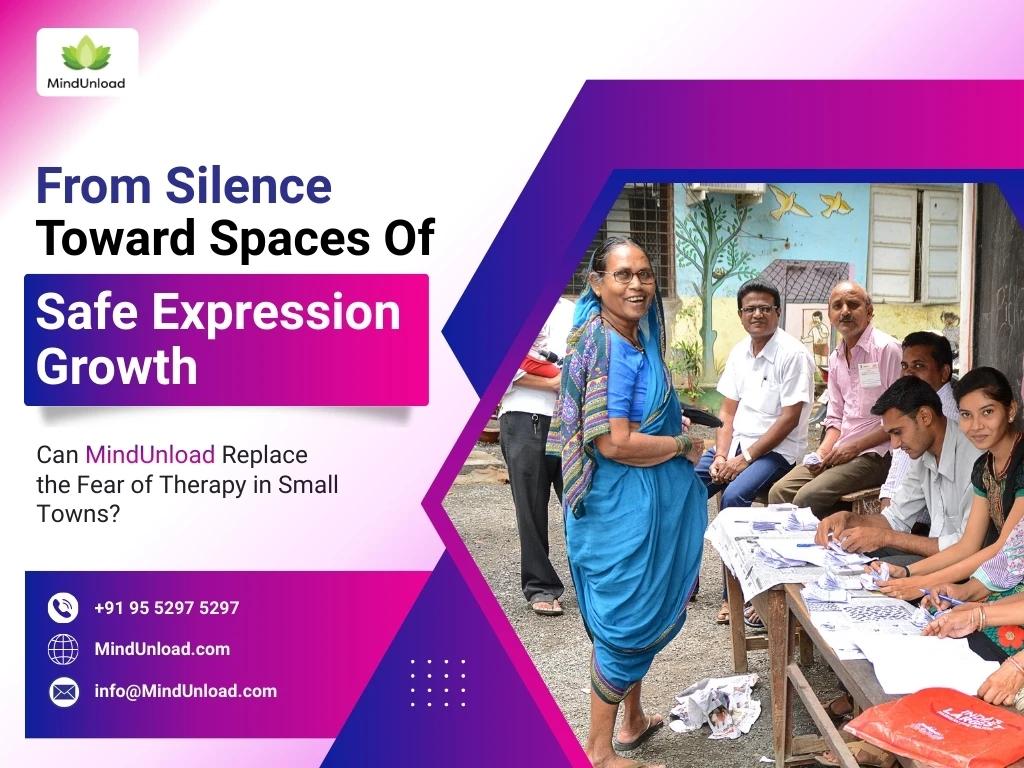
Can MindUnload Replace the Fear of Therapy in Small Towns?
Reducing Shame, Building Readiness for Help
In many small towns, emotional distress rarely arrives alone. It comes wrapped in silence, hesitation and the persistent worry of “What will people say?” While larger cities are gradually normalising counselling, therapy in smaller communities still feels distant, expensive and, for many, intimidating. The challenge is not only access; it is perception.
For a significant number of people, therapy is associated with crisis, illness or personal failure. Entering a clinic can feel like making a public declaration that something is “wrong”. In close-knit environments, where privacy is fragile and social visibility is high, stigma becomes a powerful barrier. As a result, many individuals continue to struggle quietly rather than risk being judged.
This is where MindUnload offers a different starting point.
A Private First Expression
MindUnload provides a space where individuals can articulate their thoughts without social exposure. There is no waiting room, no formal setting and no pressure to explain themselves in a structured way. For someone who has never spoken about their anxiety, simply typing “I feel lost” can be the first honest acknowledgement of their emotional state.
This initial act matters. Before people seek support, they need to recognise that their feelings are real and worthy of attention. A private digital space reduces the fear of being observed and allows expression to occur at one’s own pace.
From Silence to Self-Awareness
One of the most meaningful outcomes of using such a platform is the development of self-reflection. When individuals regularly express what they are experiencing, patterns begin to emerge. Emotions become easier to name, triggers become clearer and the intensity of isolation often reduces.
This process strengthens emotional literacy, an ability that is rarely cultivated in many small-town settings where mental health conversations remain limited. As people learn to identify what they feel, the idea of speaking to another person, whether a trusted peer or a professional, becomes less daunting.
Does It Replace Therapy?
It does not, and it should not. Therapy offers structured guidance, clinical insight and evidence-based approaches that a digital expression platform cannot provide. Conditions such as severe depression, trauma, panic disorders and thoughts of self-harm require trained mental health professionals.
However, MindUnload can reduce the fear surrounding therapy. By normalising emotional expression, it helps individuals build a habit of sharing rather than suppressing. It reduces shame and encourages users to recognise when they may need deeper support. In this sense, it acts as preparation rather than a substitute.
A Bridge for Small Towns
In smaller communities, change tends to occur gradually. A private platform can function as a bridge between silence and open conversation. For someone who would never consider visiting a counselling centre today, a confidential space can make emotional expression feel safe, reduce internal stigma and increase readiness for human support.
When combined with peer discussions and community awareness, such tools can foster both private reflection and shared dialogue. Over time, this helps reshape the perception of mental health from something hidden to something understood.
Conclusion
MindUnload cannot replace therapy, but it can replace the fear that often prevents people from seeking it. In small towns where silence has long been the default response to emotional distress, a private space to express feelings can become the first step towards acceptance, understanding and, eventually, professional care. It does not resolve every difficulty, but it opens a door that many were previously too afraid to approach.
MONTHLY MAGAZINE

Social media icons










Disclaimer: Mind Unload is a confidential platform for emotional expression. For professional mental health support, please reach out to a licensed expert.
©2024 - 2026 MindUnload.com - An Initiative by Jainam Jivika Foundation. All Rights Reserved.