

Humans don’t break from weakness, but from being strong for too long.
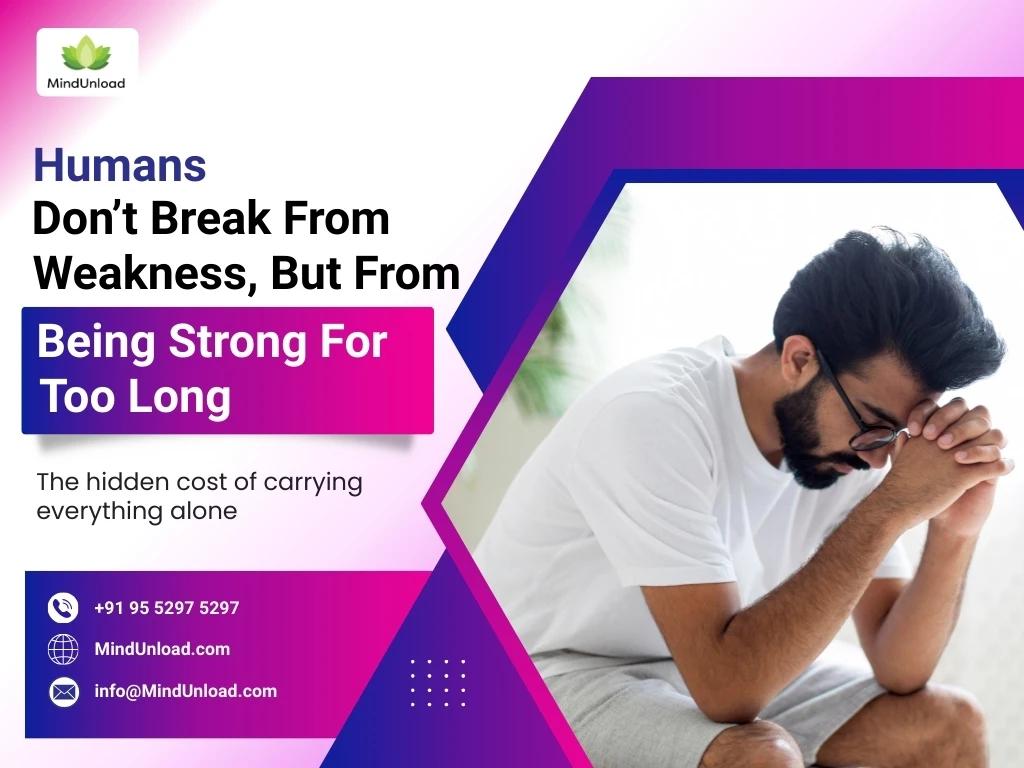
The hidden cost of carrying everything alone
When silent strength turns into emotional exhaustion
There are days when the mood drops without warning. Nothing significant has happened, yet everything feels heavier. For a long time, this can be dismissed as “nothing”, but in reality it is often the mind attempting to communicate. The most repeated response becomes a quiet sentence: “I’m okay.” It is said so often that it begins to sound true, even when it is not.
Between waking with intention and sleeping with fatigue, many people experience a silent internal strain. Outwardly, responsibilities are fulfilled and conversations continue. Internally, there is pressure that rarely finds expression.
Philosophical thought often suggests that people are shaped not only by what they experience, but by the meaning they attach to those experiences. Life does not simply create strain; it reveals what has been carried without acknowledgement.
Why Emotional Strain Appears So Frequently
Emotional fatigue develops for understandable reasons rather than at random.
Continuous mental demands
Daily life requires attention to work, relationships, expectations, and decisions. The mind absorbs these demands without always receiving sufficient time to rest.
Suppressed emotion
Feelings are often contained rather than expressed. Tears are postponed, concerns are minimised, and composure is presented as strength. Over time, unexpressed emotion accumulates and increases internal pressure.
An imbalance between stress and recovery
Stress can arise quickly, sometimes within moments. Recovery, however, requires patience, reflection, and support. When recovery is delayed, the mind remains in a state of strain.
These responses are not signs of weakness. They are indications that the mind requires care.
The Human Capacity to Withstand and Rebuild
People experience moments of feeling overwhelmed, yet they also possess a strong capacity for adaptation. Emotional strain may lead to temporary exhaustion, but it does not remove resilience. Recognising personal limits is not failure; it is awareness.
Awareness allows rest, reflection, and gradual restoration of balance.
The Value of Expression
One of the most effective ways to reduce internal pressure is to express what has been held inside. Speaking with a receptive listener or writing thoughts down can make emotions feel more manageable. When thoughts remain internal, they often intensify. When they are expressed, they begin to organise themselves.
Being heard provides reassurance that experiences do not have to be carried alone.
A Space Where Listening Matters
MindUnload provides an environment where individuals can share thoughts without judgement or interruption. It is not centred on diagnosis or analysis. Its purpose is to offer a calm space for honest expression.
Even brief conversations can reduce the sense of isolation that accompanies emotional fatigue. The process does not remove every difficulty, but it reduces the weight created by silence.
Conclusion: Strength Includes Seeking Support
Life will continue to present challenges, and moments of strain will still occur. However, these moments do not need to be faced alone. Acknowledging emotional fatigue, allowing expression, and accepting support are all forms of strength.
Resilience is not the absence of difficulty. It is the ability to recognise when the mind needs rest and when it needs to be heard. Sharing even a small part of what feels heavy can create space for steadiness, clarity, and renewal.
MONTHLY MAGAZINE

Social media icons










Disclaimer: Mind Unload is a confidential platform for emotional expression. For professional mental health support, please reach out to a licensed expert.
©2024 - 2026 MindUnload.com - An Initiative by Jainam Jivika Foundation. All Rights Reserved.